Chapter 5
To Mars and Beyond
Whatever else you think of him, this part is not spin: SpaceX rewrote what a rocket is allowed to cost.
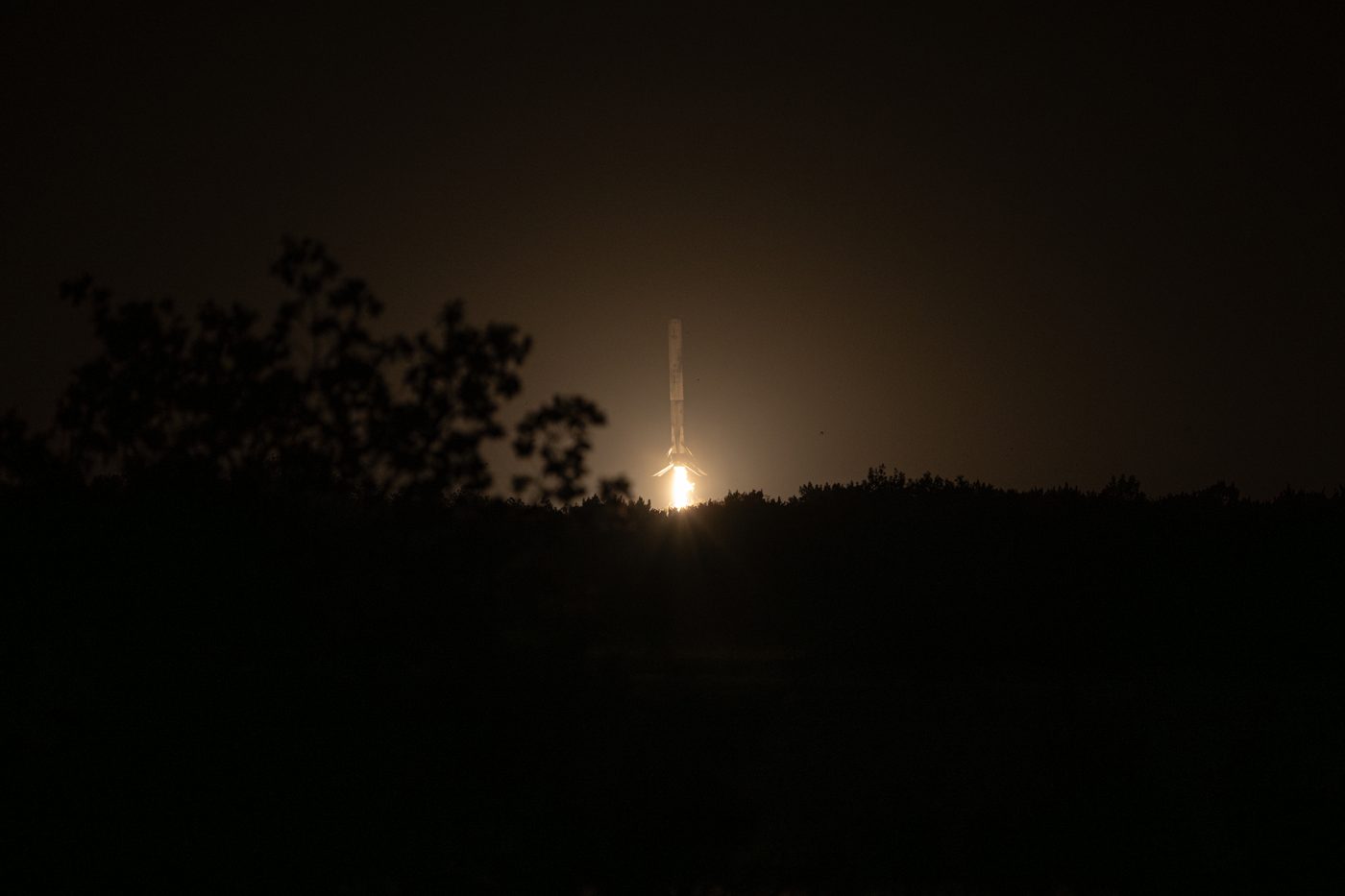
Strip away the tweets and the politics, and one part of Musk's record is close to undisputed: SpaceX changed the economics of spaceflight. For sixty years, a rocket was a one-use object -- built once, burned once, discarded in the ocean. In December 2015, a SpaceX Falcon 9 first stage flew to space, delivered its payload, then flew itself back down and landed upright on a launch pad, intact and reusable. It took a few more years and a lot of exploded prototypes on ocean drone ships before landings became routine, but by the 2020s, Falcon 9 boosters were routinely flying, landing, and flying again -- some individual boosters more than twenty times.
The reliability compounded. In 2020, SpaceX's Demo-2 mission carried NASA astronauts to the International Space Station -- the first time a private company had launched people into orbit, and the first crewed launch from American soil since the Space Shuttle retired in 2011. Falcon Heavy, SpaceX's triple-booster heavy-lift rocket, debuted in 2018 with a characteristically Musk-shaped payload: his own Tesla Roadster, launched toward the asteroid belt with a spacesuit-clad mannequin at the wheel, mostly because he didn't have anything else ready and wanted to see if the rocket could do it.
Starlink, SpaceX's satellite internet constellation, started as a side project in 2015 and became one of the largest infrastructure builds in the company's history -- an estimated $10 billion over a decade. By 2025, more than 7,600 Starlink satellites were in orbit, representing close to two-thirds of all active satellites circling Earth, and delivering broadband to places fiber and cell towers had never reached.
That reach came with a sharper edge than most infrastructure projects. When Russia invaded Ukraine in 2022, Musk shipped Starlink terminals to Ukrainian forces and kept the network running at an estimated cost to SpaceX of $400 million a year -- widely credited with keeping Ukrainian units connected when other networks went down. But he also personally set limits on how the network could be used: he declined a 2023 request to activate coverage over Crimea for a Ukrainian naval strike, citing fears of triggering a nuclear escalation, and he refused to block Russian state media from the network entirely. A privately owned satellite constellation had become, in effect, a piece of wartime infrastructure that one person could switch on or off -- a fact that unsettled allies and adversaries about equally.
None of that erases the rest of this story. But it is worth holding both facts at once: the same person who tanked a stock with an unfunded tweet also built the reusable rocket that made the International Space Station's current cargo and crew pipeline possible, and the satellite network that kept a country's army online during an invasion.