Chapter 1
Two Engineers and an Idea
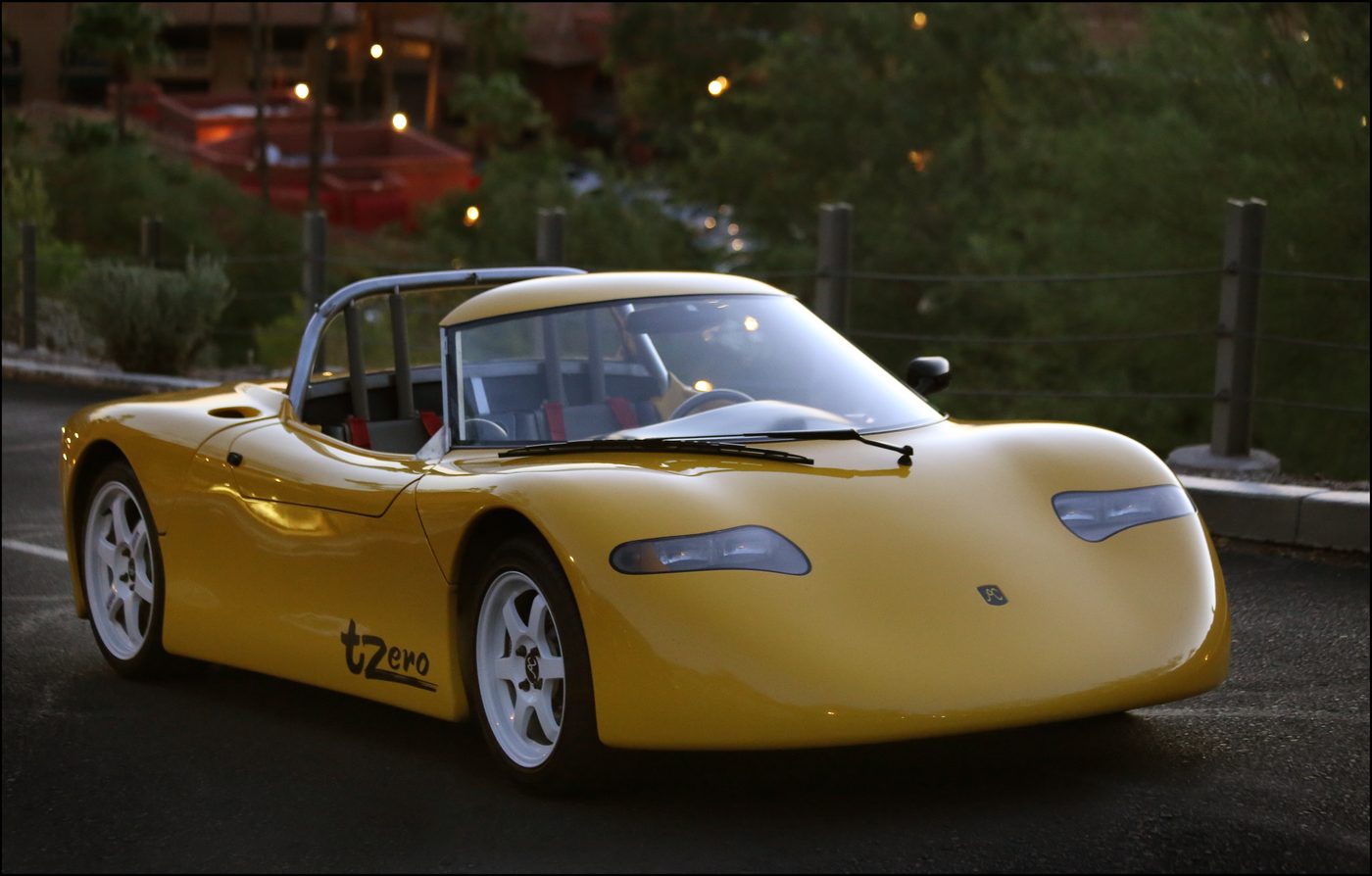
It started with a yellow prototype that could out-accelerate a Ferrari, built by a company that had no interest in ever selling it.
Tesla Motors did not start with Elon Musk. It started with Martin Eberhard, a Berkeley-raised computer engineer with a Master's degree from the University of Illinois, watching his wealthy Palo Alto neighbors park two very different cars in the same driveway: a fuel-sipping hybrid for the conscience, and a fast, impractical sports car for everything else. Eberhard's insight was that nobody should have to choose. "An electric car," he liked to say, "should not be a compromise." Lithium-ion battery chemistry, just then getting cheap and energy-dense enough for laptops, looked to him like the missing piece.
The proof of concept already existed, built by someone else. A small California company called AC Propulsion had converted a lightweight sports car chassis into an electric demonstrator called the tzero -- a car that could reportedly out-accelerate a Ferrari in a straight line, built purely to show off what an electric drivetrain could do. AC Propulsion had no interest in mass-producing it. Eberhard and a fellow engineer, Marc Tarpenning, saw a business the tzero's own creators weren't chasing, and asked to license the idea instead.
On July 1, 2003, Eberhard and Tarpenning incorporated Tesla Motors in Menlo Park, California, naming the company after Nikola Tesla, the electrical engineer whose patents underpin the AC induction motor still used in Tesla's cars today. Eberhard took the CEO title; Tarpenning became CFO. Neither of them was Elon Musk, and neither of them would still be running the company five years later -- but the idea, the name, and the first working prototype were entirely theirs.