People & power 2003–2026
The Five People Who Started Tesla
Two engineers who had already sold an e-book company, a New Zealand car builder, a battery tinkerer and a PayPal millionaire. A 2009 settlement says all five can call themselves founders. Their paths split long before that.
In this story 7 chapters
Two engineers who had done it before
Martin Eberhard and Marc Tarpenning were not new to startups when they turned to cars. On April 15, 1997, they founded NuvoMedia to design an electronic book reader. The result was the Rocket eBook, a handheld reader that NuvoMedia built until 2000. Eberhard was chief executive and Tarpenning led development.
In 2000, Gemstar-TV Guide International bought NuvoMedia for $187 million. Gemstar merged it with SoftBook, another e-reader maker, and later sold a device called the RCA eBook Reader. For Eberhard and Tarpenning the sale meant two things that mattered later: they had shipped a piece of consumer hardware from a blank page, and they had money and time to think about what to do next.
A borrowed spark
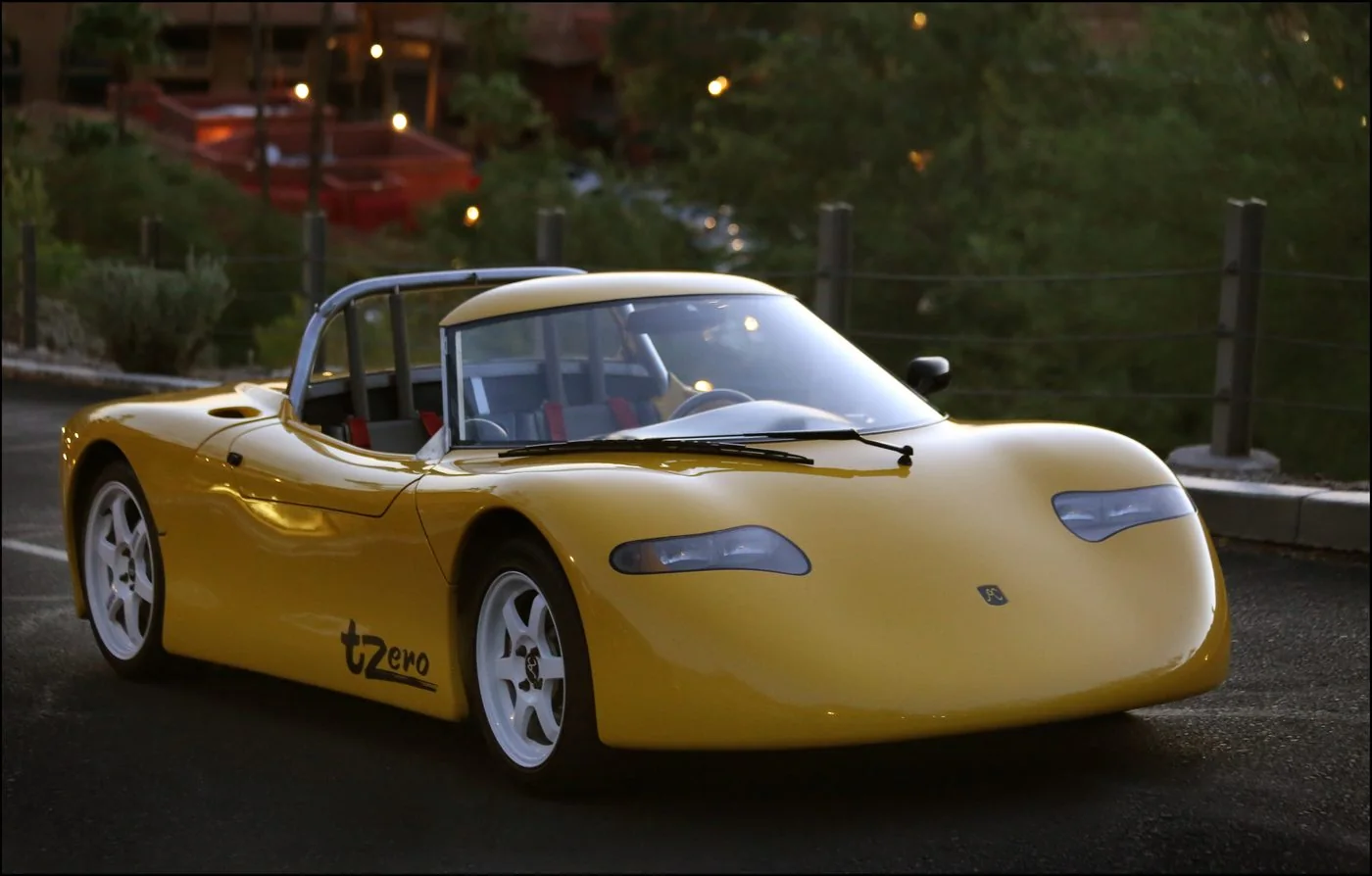
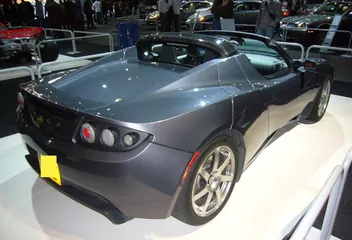
The next idea came from a car Eberhard could not buy. AC Propulsion, a small California engineering firm, had built a prototype electric roadster called the tzero. Eberhard helped pay for its conversion from lead-acid to lithium-ion cells in 2003, and the lithium car could go roughly 300 miles on a charge. AC Propulsion did not want to turn the tzero into a production car, so Eberhard and Tarpenning decided to do it themselves.
Tesla Motors was incorporated on July 1, 2003, in San Carlos, California. Eberhard served as chief executive and Tarpenning as chief financial officer. Eberhard said he wanted to build "a car manufacturer that is also a technology company," with its core technologies as "the battery, the computer software, and the proprietary motor." That sentence turned out to describe the company far better than any early spec sheet did.
Filling out the room
The third person in was Ian Wright, an engineer from New Zealand. Accounts of his start and his exit differ slightly. One version has him hired in February 2004 to help design and test a prototype of the Roadster, serving as vice president of vehicle development, then leaving at the end of 2004 and starting Wrightspeed in January 2005. Another puts his departure in May 2005, after he sold his shares. Either way, he was gone within about two years of Tesla's incorporation, while the company was still a small startup.
The fourth was JB Straubel, a young engineer who had worked on solar cars and knew about the lithium-ion tzero. He told Elon Musk about it, and in January 2004 Tom Gage of AC Propulsion emailed Musk to say Straubel thought he might want to drive the car. Musk took the test drive. Eberhard and Tarpenning, for their part, have said they first met Musk at a gathering of Mars Society members, where they bonded over a shared interest in space exploration.
Tesla's Series A round closed in early 2004 at $7.5 million, $6.5 million of it from Musk, who had money from the sale of PayPal. Musk became chairman of the board and the largest shareholder. Eberhard stayed on as chief executive. Straubel joined the company in 2004, and he later became chief technology officer, a post Tesla's own 2023 proxy statement dates from May 2005.
The chairman and the chief executive
For about three years the arrangement held: Musk funded and chaired, Eberhard ran the company, Tarpenning ran the money and later the electronics, and Straubel worked on the battery and powertrain. Tarpenning eventually became vice president of electrical engineering, supervising the electronic and software systems for the Roadster.
By the summer of 2007 the Roadster was late and costing far more to build than planned, a story told in full in the account of the first car. In August 2007 Eberhard stepped down as chief executive. Musk announced that Michael Marks, the former chief executive of Flextronics, would take over on an interim basis, and Eberhard took the title of president of technology.
That role did not last. In November 2007, Musk announced that Tesla had hired Ze'ev Drori, former chief executive of the auto security company Clifford Electronics, to lead the company, and Tesla's press release made his appointment effective December 3. Within days, Tesla said Eberhard had "transitioned from the board of directors and executive management of the company to the advisory board," less than four months after his new title was announced. Most accounts date the departures of both Eberhard and Tarpenning to January 2008.
Drori's tenure was short too. In October 2008, with the financial crisis bearing down on a company of roughly 250 employees, Musk formally took over as chief executive. Drori stayed on the board as vice chairman. Musk cut staff and assembled a $40 million financing round that kept the company out of bankruptcy. Counting the interim period under Marks, Musk was Tesla's fourth chief executive.
A fight over one word
In June 2009, Eberhard sued Musk for libel, slander and breach of contract. He alleged that Musk had pushed him out of the company and publicly disparaged him. In August, Eberhard dropped the suit, and in September 2009 Tesla confirmed a settlement. The money terms were never disclosed.
One term did become public. The settlement allows all five people, Eberhard, Tarpenning, Wright, Musk and Straubel, to call themselves co-founders of Tesla. It is the reason the company's origin story has five names on it, including two men who joined after incorporation and one who left before the first Roadster was shown to the public.
The years right after were hard for Eberhard. He later said his contract left Tesla owning the rights to the work he did there and barred him from working with another automotive company for two years. "So for the first couple of years, I was, first of all, out of money and, second of all, unemployed," he said. "Pretty much on the day that time period expired, Volkswagen hired me."
Where the five went
Eberhard joined Volkswagen in the fall of 2009 and served as director of electric vehicle development at its Electronics Research Laboratory until 2011. In September 2016 he founded inEVit, a startup meant to supply automakers with electric drivetrains and energy storage. SF Motors, now Seres, bought it in October 2017, and Eberhard served as chief innovation officer until July 2018. In 2019 he founded Tiveni, which set out to make battery systems for electric vehicles.
Tarpenning moved into investing and mentoring. He became a venture partner at Spero Ventures, the firm backed by Pierre Omidyar, working with startups focused on the environment.
Wright built Wrightspeed around electric powertrains for medium- and heavy-duty commercial vehicles. It raised a $5 million Series A in 2010, began supplying powertrains to FedEx in 2014 and received a $6 million grant from the California Energy Commission in 2015.
Straubel stayed the longest. He spent about 15 years at Tesla and is widely credited as an inventor of its core battery and powertrain technology. In 2017, while still chief technology officer, he founded Redwood Materials, which recycles lithium-ion batteries into anode and cathode materials. In July 2019 he moved to an advisory role at Tesla to focus on Redwood, and Drew Baglino took over his duties. Four years later Straubel came back in a different role. Tesla nominated him to its board in April 2023, and shareholders elected him to a three-year term at the annual meeting on May 16, 2023. He was still listed among Tesla's directors in the company's 2025 annual meeting materials.
Musk remained chief executive and became the face of the company, to the point that many people assume he started it.
The argument that never quite ended
The settlement did not end the bad feeling. In early 2020, Musk said on The Third Row Tesla Podcast that Eberhard "is literally the worst person I've ever worked with." Eberhard responded that the podcast, along with what he called Musk's recent attacks on him on Twitter, were "absolute breaches of his and Tesla's mutual non-disparagement agreements with me."
Eberhard and Tarpenning have also told their side at length. In an interview recorded in late 2019 and published by CNBC in February 2021, the two described building and delivering the first Roadsters, persuading people that an electric car could be as appealing as a luxury sports car, and bringing Musk on board. Excerpts appeared in the CNBC documentary Tesla: Hell of a Ride.
Nothing in the record settles who deserves the most credit, and the founders themselves have never agreed on it. What it does show is a sequence. Two engineers with an e-reader exit started the company. A New Zealand engineer helped build the first prototype and left. A battery engineer brought the investor who funded it, then stayed 15 years and later returned as a director. And the investor took the chairman's seat in 2004 and the chief executive's office in 2008, and kept both the company and, in public memory, most of the story.
The cars in this story
Sources
- Wikipedia: Rocket eBook
- Wikipedia: Martin Eberhard
- Wikipedia: Tesla, Inc.
- Wikipedia: History of Tesla, Inc.
- Wikipedia: AC Propulsion tzero
- CNBC: Test-driving this obscure 1997 sports car convinced Elon Musk to invest in Tesla
- CNBC: Tesla founders Martin Eberhard and Marc Tarpenning on Elon Musk
- Electrek: Tesla's original team, where are they now?
- MCJ: Marc Tarpenning, Co-founder of Tesla
- IEEE Spectrum: Ian Wright in the fast lane
- TechCrunch: Tesla Co-founder's Wrightspeed Raises $5 Million Series A Round
- Greentech Media: Tesla Founder Ousted
- Tesla: Tesla Motors Completes CEO Search
- Greentech Media: Tesla Puts Musk at Helm, Expects Layoffs and Model S Delay
- Fortune: Tesla's wild ride continues
- Greentech Media: As Tesla Settles Lawsuit, Five Founders Emerge
- Yahoo Autos (Business Insider): Tesla cofounder says he was 'basically unemployable'
- Electrek: Tesla founder Martin Eberhard's inEVit acquired by SF Motors
- Electrek: Tesla founder Eberhard's new battery startup
- CNBC: Tesla says CTO JB Straubel is moving to advisory role
- CNBC: JB Straubel wasn't just CTO at Tesla, he was an inventor of its core technologies
- Wikipedia: J. B. Straubel
- Tesla 2023 proxy statement (SEC Form DEF 14A)
- CNBC: Tesla nominates ex-CTO JB Straubel to board of directors
- TechCrunch: Tesla shareholders elect former CTO, co-founder JB Straubel to board
- Vote Tesla: JB Straubel
- Benzinga: Musk On Tesla Founder Martin Eberhard
.jpg)

