Chapter 4
Mainstreaming the Electric Car
A federal loan, a $42 million factory, and a car so good it embarrassed the rest of the industry -- that's how Tesla stopped being a niche.
Surviving 2008 bought Tesla time, not safety. In January 2010, the company secured a $465 million loan from the Department of Energy's clean-energy program -- money that would prove critical to developing the car that actually made Tesla mainstream. Four months later, Tesla bought the shuttered NUMMI plant in Fremont, California, from Toyota for $42 million: a fully equipped, recently idle auto factory at a fraction of what building one from scratch would cost.
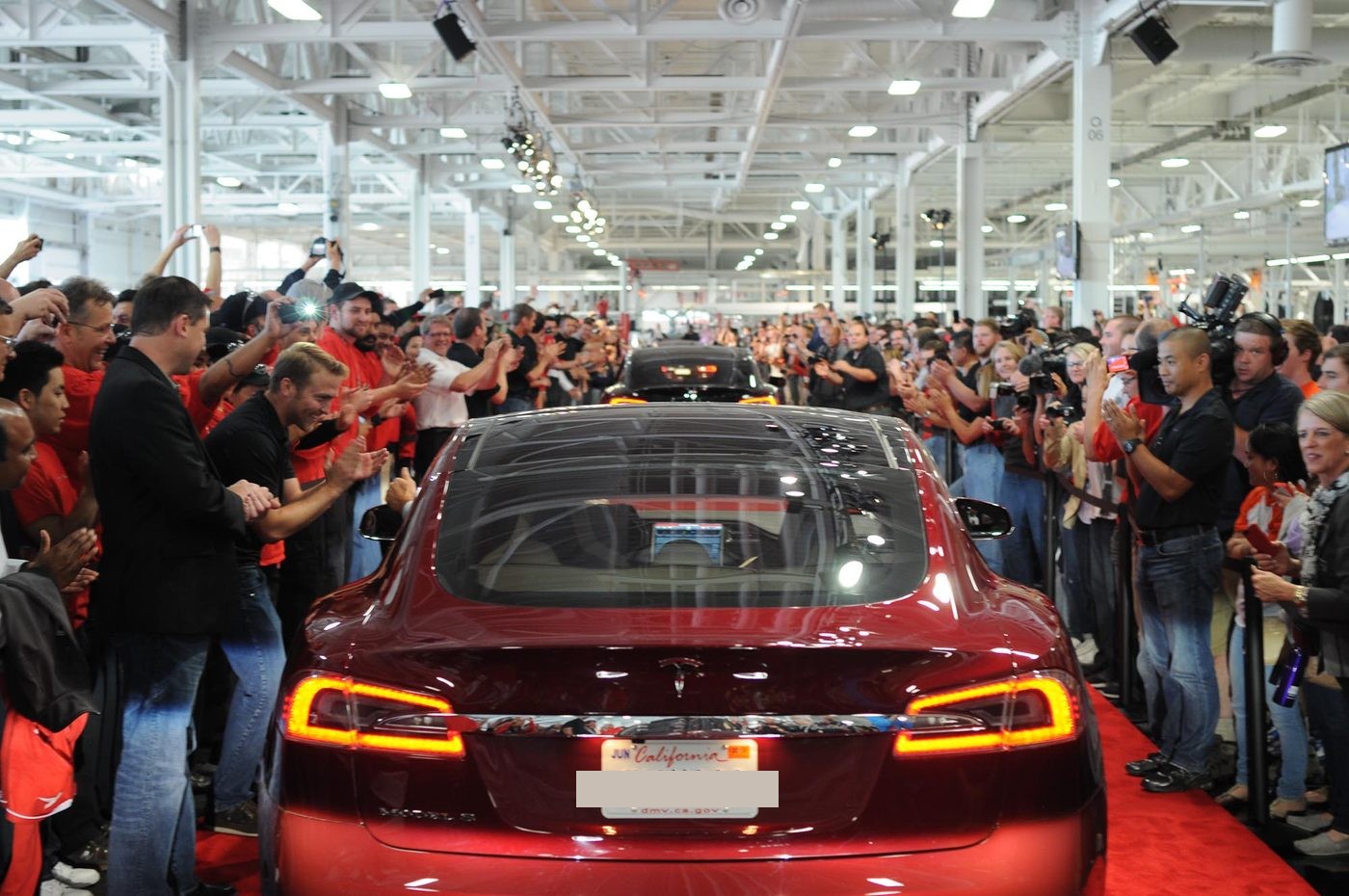
On June 29, 2010, Tesla went public, becoming the first American car company to IPO since Ford in 1956. The offering was modest by later standards -- 13.3 million shares at $17 each, raising $226 million -- but it gave Tesla public-market cash and public-market scrutiny for the first time. Roadster production wound down in January 2012, right as its successor arrived: the Model S, a full-size luxury sedan that started rolling off the Fremont line that June. It won Motor Trend's Car of the Year for 2013 and, that September, became the first electric car ever to top a country's monthly new-car sales chart, in Norway.
The lineup kept expanding -- Model X, a falcon-winged SUV, in September 2015; Autopilot driver assistance rolling out across the fleet from 2014 onward; a Powerwall home battery that took $800 million in orders within a week of its April 2015 announcement. Tesla's November 2016 acquisition of SolarCity, a solar installer co-founded by Musk's cousins, was messier: the $2.6 billion all-stock deal folded a company with undisclosed liquidity problems into Tesla, and shareholders sued Musk and Tesla's board, alleging the purchase mainly bailed out a Musk family business at their expense. Tesla's other directors settled in 2020; a Delaware court ultimately ruled in Musk's favor in 2022.
None of the earlier models changed the industry the way the Model 3 eventually did. Unveiled in 2016 with over 325,000 paid reservations within a week, it was designed to be Tesla's first genuinely mass-market car -- and its production ran straight into the automation crisis Tesla itself called "production hell," plus a market-rattling tweet from its CEO along the way. By the end of 2018 the line had stabilized, and the Model 3 went on to be the best-selling electric car in the world for four consecutive years. A company that had delivered 147 cars in its first eighteen months was, a decade later, outselling luxury sedans from automakers a century older.